Hyper-Personalized Email Marketing: The Future of Customer Engagement
In today’s fast-paced digital world, generic marketing emails no longer capture attention. Consumers expect brands to understand their preferences, anticipate their needs, and deliver relevant content at the right time. This shift has given rise to hyper-personalized email marketing, a powerful strategy that goes far beyond simply addressing a recipient by their first name.
Hyper-personalization uses data, automation, and behavioral insights to create highly tailored email experiences for individual users. When done correctly, it can significantly improve open rates, click-through rates, and customer loyalty. In this blog, we’ll explore what hyper-personalized email marketing is, why it matters, and how you can implement it effectively.
What is Hyper-Personalized Email Marketing?
Hyper-personalized email marketing is the practice of using advanced data analytics, artificial intelligence (AI), and real-time customer behaviour to deliver highly customised email content. Unlike traditional personalization, which may include simple elements like names or locations, hyper-personalization focuses on delivering contextually relevant messages based on user actions, preferences, and intent.
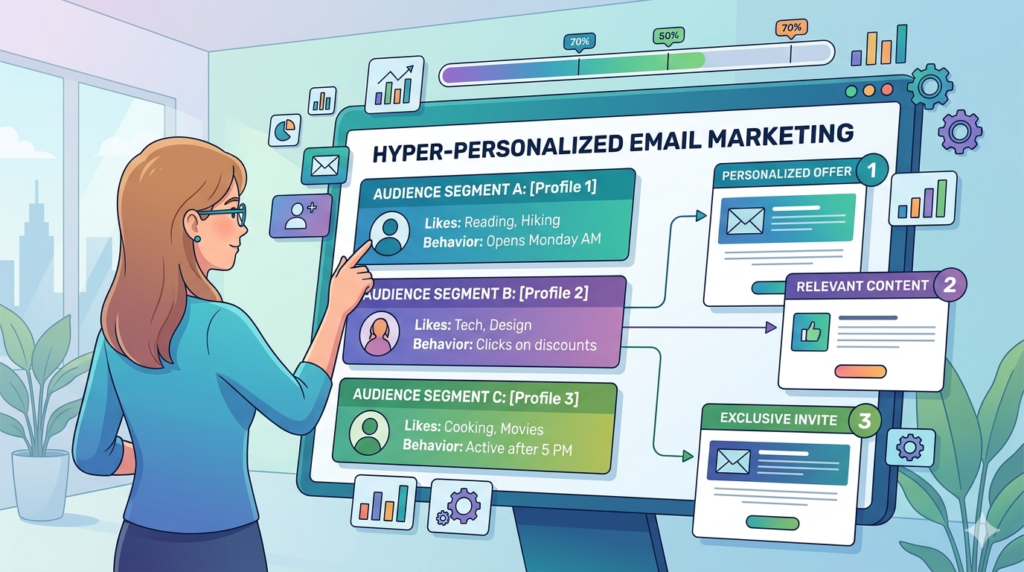
Traditional Personalization vs Hyper-Personalization
| Traditional Personalization | Hyper-Personalization |
|---|---|
| Uses basic data (name, gender) | Uses deep behavioral data |
| Static email content | Dynamic, real-time content |
| One-size-fits-many approach | One-to-one marketing |
| Limited segmentation | Micro-segmentation |
Why Hyper-Personalized Email Marketing Matters
1. Improved Customer Experience
Customers today expect brands to understand them. Hyper-personalized emails provide relevant content that aligns with individual preferences, creating a seamless and enjoyable experience.
2. Higher Engagement Rates
Emails tailored to user behavior are more likely to be opened and clicked. Personalized subject lines and content significantly increase engagement metrics.
3. Increased Conversion Rates
When users receive content that matches their interests or purchase intent, they are more likely to take action, whether it’s making a purchase or signing up for a service.
4. Stronger Customer Loyalty
Personalized communication builds trust. Customers feel valued when brands acknowledge their needs, leading to long-term loyalty.
Key Components of Hyper-Personalized Email Marketing
1. Data Collection and Integration
To create hyper-personalized emails, you need data. This includes:
- Demographic data (age, location)
- Behavioral data (website visits, clicks)
- Transactional data (purchase history)
- Psychographic data (interests, preferences)
Integrating this data from multiple sources allows you to build a complete customer profile.
2. Customer Segmentation
Segmentation is the backbone of personalization. Hyper-personalization takes it a step further by creating micro-segments based on detailed criteria such as:
- Browsing behavior
- Purchase frequency
- Engagement level
3. Dynamic Content
Dynamic content allows different users to see different versions of the same email. This includes:
- Product recommendations
- Personalized offers
- Location-based content
4. Automation and AI
Automation tools and AI help analyze large volumes of data and deliver emails at the right time. AI can predict customer behavior and suggest the most relevant content.
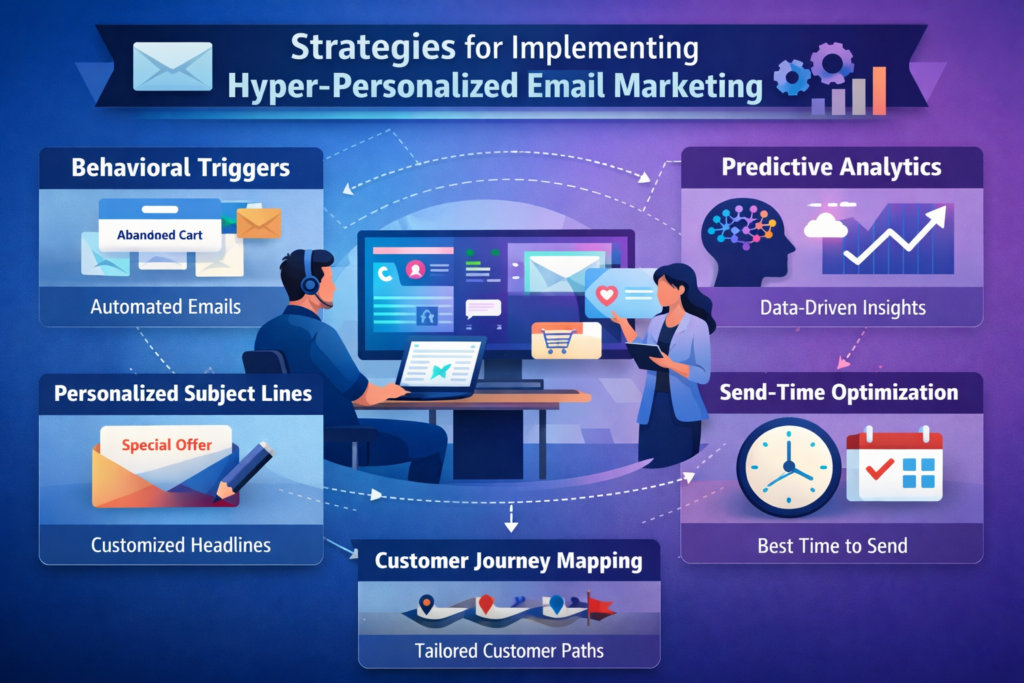
Strategies for Implementing Hyper-Personalized Email Marketing
1. Use Behavioral Triggers
Triggered emails are sent based on user actions. Examples include:
- Abandoned cart emails
- Welcome emails
- Post-purchase follow-ups
These emails are highly effective because they are timely and relevant.
2. Leverage Predictive Analytics
Predictive analytics uses past behavior to forecast future actions. This helps in:
- Recommending products
- Identifying churn risks
- Optimizing send times
3. Personalize Subject Lines
Subject lines are the first thing users see. Personalized subject lines can increase open rates significantly. For example:
- “John, your favorite items are back in stock!”
- “Special offer just for you, Sarah!”
4. Optimize Send Time
Timing plays a crucial role in email marketing. AI tools can determine the best time to send emails based on individual user behavior.
5. Create Customer Journeys
Instead of sending isolated emails, design a complete customer journey. This includes:
- Awareness stage emails
- Consideration stage content
- Conversion-focused messages
Tools and Technologies for Hyper-Personalization
1. Customer Data Platforms (CDPs)
CDPs collect and unify customer data from multiple sources, providing a single view of the customer.
2. Email Marketing Automation Tools
Platforms like Mailchimp, HubSpot, and ActiveCampaign offer advanced personalization features such as automation workflows and segmentation.
3. Artificial Intelligence and Machine Learning
AI tools analyze customer behavior and deliver insights that help in creating personalized campaigns.
Challenges of Hyper-Personalized Email Marketing
1. Data Privacy Concerns
With increasing regulations like GDPR, businesses must ensure they handle customer data responsibly.
2. Data Management Complexity
Collecting and managing large volumes of data can be challenging without the right tools and infrastructure.
3. Resource Intensive
Hyper-personalization requires investment in technology, skilled professionals, and continuous optimization.
Best Practices for Success
1. Focus on Quality Data
Accurate and relevant data is essential for effective personalization. Avoid relying on outdated or incomplete data.
2. Start Small and Scale
Begin with simple personalization strategies and gradually move toward more advanced techniques.
3. Test and Optimize
Regularly test different elements such as subject lines, content, and timing to improve performance.
4. Maintain Transparency
Be clear about how you collect and use customer data. This builds trust and ensures compliance with regulations.
Future Trends in Hyper-Personalized Email Marketing
1. Real-Time Personalization
Emails will adapt in real-time based on user actions and context.
2. AI-Driven Content Creation
AI will play a bigger role in generating personalized content automatically.
3. Integration with Omnichannel Marketing
Email marketing will become more integrated with other channels like social media and SMS for a unified customer experience.
Hyper-personalized email marketing is no longer a luxury—it’s a necessity in today’s competitive digital landscape. By leveraging data, automation, and AI, businesses can create meaningful connections with their audience and drive better results.
While implementing hyper-personalization may seem complex, starting with the right strategy and tools can make the process manageable and highly rewarding. As technology continues to evolve, brands that embrace hyper-personalization will stay ahead of the curve and build stronger relationships with their customers.
Final Thoughts
The key to success in hyper-personalized email marketing lies in understanding your audience deeply and delivering value at every touchpoint. It’s not just about selling products—it’s about creating experiences that resonate with each individual.
If you’re looking to elevate your email marketing strategy, now is the perfect time to invest in hyper-personalization and unlock its full potential.
Leave a Reply