digital marketing strategies, SEO techniques, content marketing trends, social media marketing, email marketing campaigns, AI marketing tools, digital marketing 2026
EFFECTIVE DIGITAL MARKETING :
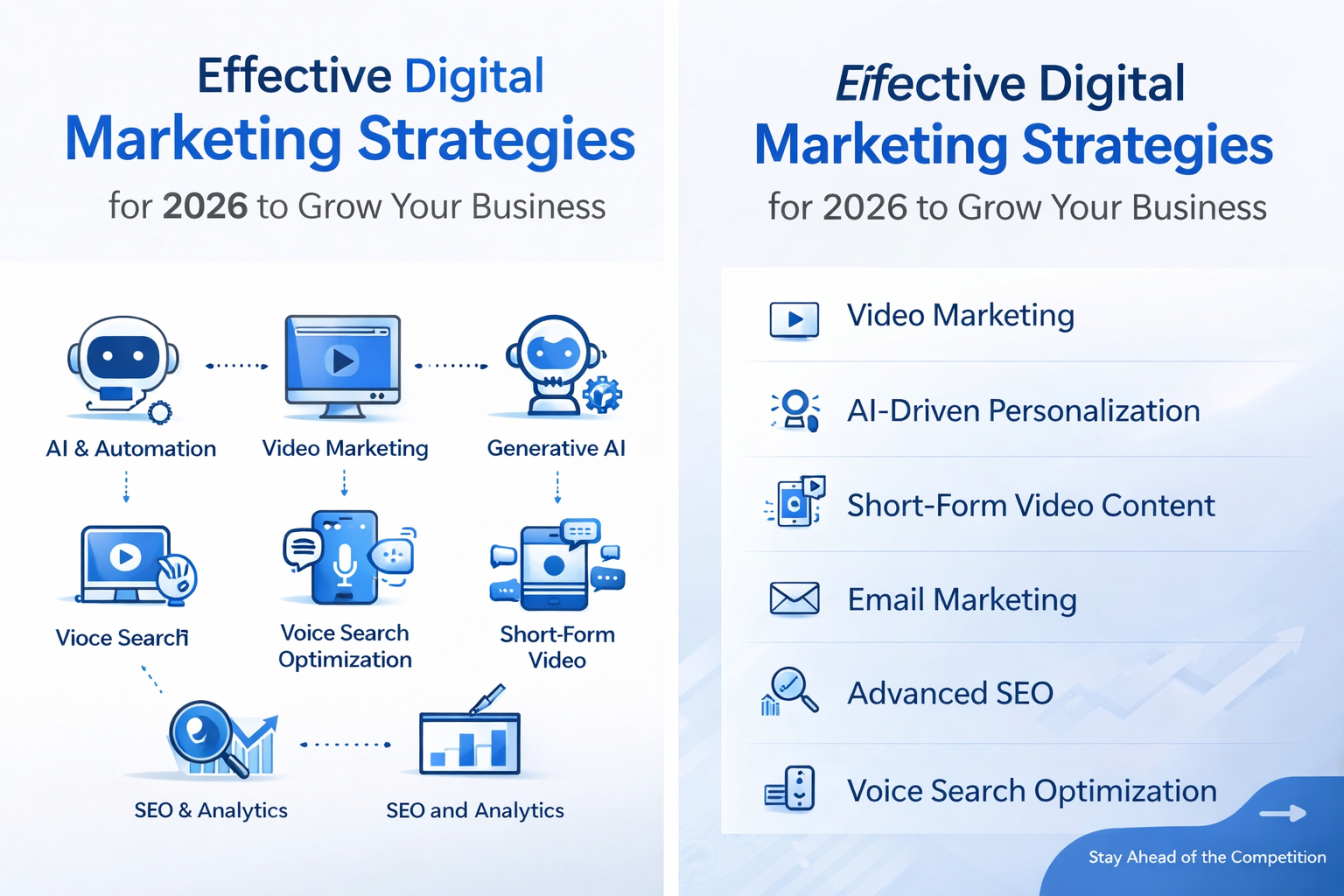
The digital marketing landscape is evolving faster than ever, and businesses that fail to adapt risk falling behind. In 2026, success is no longer just about having a website or social media presence—it’s about strategic planning, personalized engagement, and leveraging technology to reach your audience effectively.
Whether you’re a small business or a large corporation, understanding the top digital marketing strategies can help increase traffic, generate leads, and grow revenue. In this blog, we’ll explore practical, actionable techniques for 2026 that will help your business stay competitive and relevant in the digital world.
1. Master SEO Techniques for Maximum Visibility
Search Engine Optimization (SEO) continues to be the backbone of digital marketing. Optimizing your website ensures that your business appears in search results when potential customers are looking for products or services you offer.
Key SEO Practices for 2026
- Long-Tail Keywords: Focus on phrases that match user intent for higher-quality traffic.
- Voice Search Optimization: With smart assistants like Alexa and Google Home, voice searches are rising. Optimize your content for natural, conversational queries.
- Mobile-First Indexing: Google prioritizes mobile-friendly sites. Ensure fast load times and responsive design.
- High-Quality Content: Search engines reward informative, well-structured content that solves user problems.
Regularly audit your website for broken links, page speed issues, and outdated content to maintain high search rankings.Prioritize mobile optimization and Core Web Vitals to enhance user experience and significantly reduce bounce rates.
Refresh your older blog posts every 3–6 months with updated keywords and data to ensure search engines always recognize your content as relevant and fresh.
2. Content Marketing Trends to Boost Engagement
Content marketing is no longer just about blogs—it’s about creating valuable, engaging, and shareable content that resonates with your audience.
Effective Content Marketing Strategies
- Blogs and Articles: Provide in-depth guides and tutorials related to your industry.
- Video Marketing: Short-form videos, tutorials, and live streams increase engagement and brand recall.
- Interactive Content: Quizzes, polls, and infographics encourage active participation.
- AI-Powered Personalization: Use AI tools to deliver content tailored to user behavior and preferences.
Repurpose content across platforms. For example, a blog can be converted into a video, infographic, or social post to maximize reach.Transform key takeaways into bite-sized carousels or reels to capture the attention of audience segments who prefer visual storytelling.
Adapt long-form insights into email newsletters or podcast scripts, ensuring your message stays consistent across every touchpoint of the customer journey.
3. Social Media Marketing for Brand Growth
Social media is a powerful tool for building relationships and reaching new audiences. In 2026, the platforms you choose and how you use them will make all the difference.
Top Social Media Strategies
- Targeted Advertising: Platforms like Facebook, Instagram, LinkedIn, and TikTok allow you to target users based on demographics, interests, and behaviors.
- Consistent Posting: Regular content keeps your brand top of mind. Use a content calendar to plan ahead.
- Influencer Collaborations: Partner with trusted influencers in your niche to build credibility and reach new audiences.
- Social Commerce: Sell products directly on social platforms for seamless user experience.
Track engagement metrics such as likes, shares, comments, and click-through rates to refine your campaigns.
4. Email Marketing Campaigns That Drive Conversions
Email marketing remains one of the highest ROI digital marketing strategies. It’s ideal for nurturing leads, promoting products, and keeping your audience engaged.
Effective Email Marketing Techniques
- Segmentation: Send emails to specific groups based on past interactions, interests, or demographics.
- Automation: Use automated workflows to send personalized messages at the right time.
- Compelling Subject Lines: Increase open rates with catchy, clear, and relevant subject lines.
- Clear Call-to-Actions (CTA): Guide readers to take action, whether it’s purchasing, downloading, or signing up.
A/B test subject lines, content, and CTAs regularly to improve email performance and engagement rates.
5. Pay-Per-Click (PPC) Advertising for Immediate Results
PPC advertising is a fast and measurable way to drive traffic and leads. Platforms like Google Ads and social media ads allow businesses to appear at the top of search results or social feeds.
PPC Best Practices
- Keyword Targeting: Focus on high-intent keywords for better ROI.
- Ad Copy Optimization: Write persuasive, relevant ads that capture attention.
- Landing Page Design: Ensure your landing pages are aligned with the ad’s message and optimized for conversions.
- Retargeting Campaigns: Re-engage visitors who didn’t convert the first time.
Monitor campaign metrics daily, including click-through rate, conversion rate, and cost per acquisition, to optimize performance.
6. AI tools to enhance marketing efficiencyAI technology is transforming digital marketing by automating repetitive tasks, analysing data, and personalizing campaigns.
AI applications in marketing
Modern marketing teams increasingly rely on AI to streamline workflows and improve decision-making. These tools can analyze large datasets to uncover customer insights and predict behavior. Additionally, AI enables highly personalized campaigns that enhance user engagement and drive better results.
- Predictive Analytics: Identify trends and predict customer behavior.
- Content Creation: Automate blog drafts, social media posts, and email campaigns.
- Chatbots: Offer instant support and improve customer experience.
- Marketing Automation: Segment audiences, schedule campaigns, and track engagement effortlessly.
Pro Tip: Combine AI insights with human creativity for campaigns that are both data-driven and engaging.
7. Personalization and Privacy
Modern consumers value personalization, but privacy is equally important. Balance these by using data ethically and delivering relevant experiences.
- First-Party Data: Collect data directly from your audience to tailor marketing campaigns.
- Privacy Compliance: Follow GDPR, CCPA, and other data protection regulations.
- Personalized Customer Experience: Use behavior and interaction data to provide relevant recommendations, offers, and content.
Transparent privacy policies and clear consent forms build trust with your audience. And I will show the video that has given us some knowledge.
Digital marketing in 2026 is about strategic execution, personalization, and leveraging technology. By focusing on SEO, content marketing, social media, email campaigns, PPC, AI tools, and privacy-conscious personalization, businesses can increase traffic, generate leads, and grow revenue.
Success in digital marketing isn’t static—it requires ongoing analysis, testing, and adaptation. Companies that embrace these strategies will not only survive but thrive in the ever-changing digital landscape.
Leave a Reply